


LÆR ALT OM
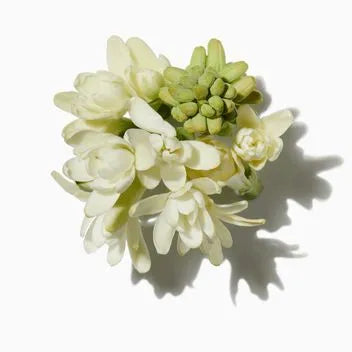
Indian Tuberose
Berusende, intens og angiveligt forførende - tuberose bruges i den fine parfumekunst til at tilføre en betagende elegant note til akkorder. Dens facetter er et regulært olfaktorisk fest-bord med dufte af honning og jasmin samt nuancer, der minder om søde frugter. Erotiske, animalske facetter blander sig i en kødelig note af sød ekstravagance.
Berusende, jasminagtig, blomstret, frugtig, krydret, honningsød, betagende og sensuel.
EgyptIndiaComorosMoroccoFloral
Historie
Tuberose has been cultivated in Grasse since the 17th century, where its lavish scent was extracted using the enfleurage technique. However, the flower’s true history far precedes its centuries of cultivation in Grasse. In fact, the Aztecs are even thought to have perfumed their chocolate using the dainty flower. In Victorian times, tuberose was thought to symbolize all things sensual and decidedly scandalous—a scent known for its aphrodisiac powers. Young women were warned of the power the flower possesses, and advised against breathing its intoxicating scent after dark.
Produktion
A sun-loving flower, the tuberose is native to Mexico and India. It is an herbaceous plant grown from bulbs, with high floral stems and flowers that grow in fragrant 6-petal clusters. Today, tuberose flowers are mostly grown in India, Egypt, on the Comoro Islands, Morocco, and—to a lesser extent—France. Tuberose begins to bloom at the end of spring and reaches its peak in early August. The corollas are harvested every morning—just as they open. Their scent is gathered through extraction using volatile solvents.
