


LÆR ALT OM
Mimosa
Pudrede, honningagtige noter blander sig med sofistikationens bløde sødme. Flygtig i sin blomstring fremhæver mimose blomsterbuketter med en uovertruffen elegance. Guddommeligt feminin.
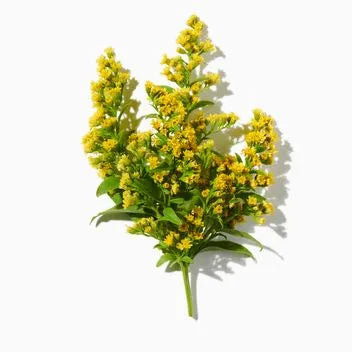
Mimosens søde, pudrede og solskinsvarme aroma med honningsøde mandelundertoner fører bæreren ud på en blomstermark på en skyfri dag. Den destilleres fra den fjerbløde kronblade-krans på mimoseblomsten. Parfumører læner sig op ad mimose for at skrue op for den pudrede fornemmelse i en duft, og derfor parres den ofte med iris-rod eller gulerodsfrø. Den er et fantastisk valg til en date-aften takket være dens evne til at vække lethed, stråleglans og sødme.
Blomstret og grøn med pudrede og honningagtige, fløjlsbløde noter.
EgyptFranceIndiaMoroccoFloral
Historie
Mimosa was first brought to Europe at the end of the 17th century, starting first in Great Britain. It was the wealthy Anglo-Saxons that brought the plant with them on vacations in France in the 1860s. Spreading quickly along the Mediterranean coast near Menton, it even inspired one city to famously change its name to Bormes-Les-Mimosas, in honor of the beautiful yellow foliage decorating the local landscape.
Produktion
Mimosa is a thorny shrub originating in Australia that is cultivated for its strongly perfumed round and pompom-like yellow flowers. Growing to heights of 2-10 meters, it is mainly cultivated in Southern France, Egypt, India and Morocco. Mimosa concrete is obtained from the fresh flowers, using a volatile solvent extraction process. The absolute is then produced by rinsing the concrete with alcohol.
Vidste du?
A single bottle of perfume can commonly contain up to 1000 mimosa flowers. The yellow pompom-like flower we typically see used by perfumers and florists is actually in the botanical category of acacia. More specifically, perfumery uses two species: Acacia decurrens and Acacia farnesiana. True mimosa, Mimosa Pudica, doesn't have the famous yellow flowers, and is known as a sensitive plant because its leaves curl up to protect itself at the slightest touch.
