


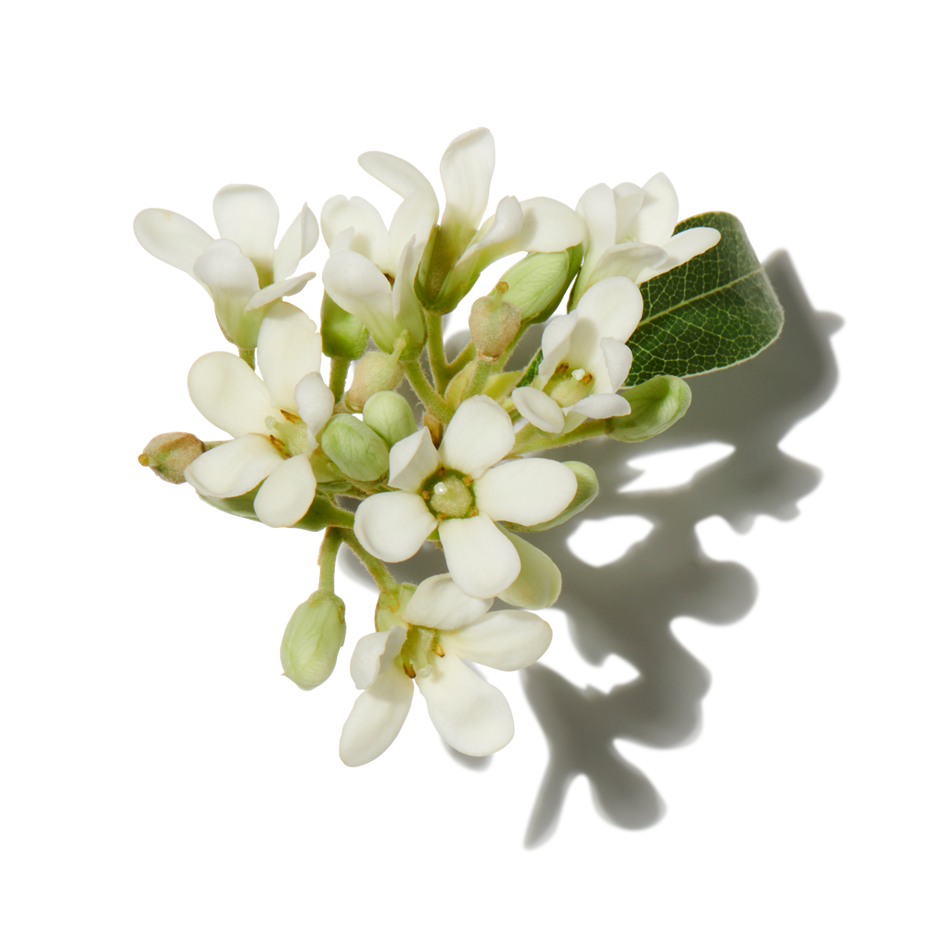
LÆR ALT OM
Osmanthus
Dristig, sexet og provokerende: osmanthus' duft er dybt forførende og passer særligt godt sammen med varme, sensuelle ambrede toner som vanilje eller sandeltræ. Den tilfører en tydelig læderagtig facet til ambrede akkorder uden at virke tung eller animalsk. Dens eksotiske, frugtige accenter af abrikos blender smukt i friske citrustoner, hvor osmanthus spiller en helt anden rolle og tilfører en sødere, sprudlende dimension til levende akkorder.
Blomstret og eksotisk med frugtige toner af abrikos og læder - sexet og dristig.
ChinaFloral
Historie
Osmanthus is one of ten traditional Chinese flowers to have been cultivated for their fragrance for two thousand years. The osmanthus tree and its shower of fragrant flowers is mentioned in Chinese legends and poetry, while osmanthus blossoms are used to flavor green tea—giving it a taste that is similar to jasmine tea, yet lighter and more fruity. Some find that it has an apricot note. In the Yunnan province, a custom has persisted for more than twenty-three centuries of making a liqueur from osmanthus blossoms to celebrate autumn, which is served in a jade cup.
Produktion
Blossoming in inflorescent clusters of gold and silver, the Chinese osmanthus flower thrives in the rich, mountainous soil surrounding the city if Guilin, as well as the subtropical regions of Chunking, Hsintu and Chengdu. The flower is celebrated for its beauty as well as its divine fragrance: blossoming in shades of silver (yingkwei) and gold (tchin- Kwei). However, the tchin- Kwei variety is particularly fragrant—igniting the interest of perfumers and fragrance connoisseurs alike. To collect the delicate blossoms, sheets are spread on the ground and the trees’ branches are shook to create a rainfall of osmanthus—a process that we imagine would be quite a delight for the eyes. Once collected, the scent is extracted using solvents.
